Shingles: The Disease & Vaccines
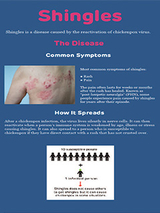
A shingles vaccine is available for adults 50 years of age and older in the United States. The vaccine prevents much of the pain and suffering caused by shingles when the virus that causes chickenpox reawakens in those with aging or compromised immune systems.
View a full-size image of the infographic: English | Spanish
The disease
What is shingles?
Shingles is a disease caused by the reawakening (or reactivation) of chickenpox virus. Shingles most often occurs in elderly people and people with weakened immune systems. Common symptoms of shingles include a rash, usually along a nerve path, and severe pain. Sometimes the pain can last for months and be so debilitating that typical daily routines are disrupted.
How common is shingles?
Every year in the United States shingles affects between 500,000 and 1 million people. Individuals have a 20-30 percent chance of getting shingles during their lifetime. About half of the people who live to 85 years old will get shingles.
Is shingles dangerous?
Although people do not die from shingles, they can be severely hurt by it. Perhaps the most common and debilitating complication is persistent, long-lived pain. The pain can be so severe that it leads to sleeplessness; feelings of helplessness and depression; weight loss; anorexia; interference with basic daily activities, such as dressing, bathing and eating; and inability to participate in normal social activities. The pain can last for months or even years. Alongside the pain caused by labor and that of corneal abrasions, the pain caused by shingles is among the most debilitating pains in medicine. Shingles-induced pain can be so relentlessly debilitating that it can be a cause for suicide.
About 15 of every 100 people with shingles have blisters that are associated with nerves around the eyes. This can result in reduced vision and blindness.
Scarring and concurrent bacterial infections can also occur at the site of the rash.
Is shingles contagious?
No. You cannot get shingles from someone who has shingles. However, because shingles is caused by the same virus that causes chickenpox, someone who has not had chickenpox or a chickenpox vaccine can get chickenpox if exposed to the shingles rash.
How can you avoid shingles?
Once you have had chickenpox, you can get shingles. People who are 50 years of age or older can decrease their chance of getting shingles by getting the shingles vaccine.

The vaccine
How is the shingles vaccine made?
The shingles vaccine available in the U.S., Shingrix®, contains a single protein from the surface of herpes zoster virus as well as two adjuvants: QS21 and monophosphoryl lipid A. QS21 is a soap-based molecule isolated from the bark of the Quillaja saponaria tree. Monophosphoryl lipid A is a detoxified form of lipopolysaccharide, a potent adjuvant taken from the surface of common bacteria.
The first shingles vaccine, called Zostavax®, is no longer available in the U.S. However, this version contained a more concentrated version of the same live, weakened virus as the current chickenpox vaccine. It contained about 14 times the amount of weakened chickenpox virus than the vaccine for children. This amount of virus was necessary to obtain a protective response in the aging immune systems of older adults. The introduction of Shingrix vaccine was important because adjuvants in the vaccine improved immune responses in older adults and decreased the need to use large quantities of the live, weakened virus also necessary to make chickenpox vaccine. For these two reasons Zostavax is no longer available in the U.S.
Does the shingles vaccine work?
Yes. the shingles vaccine protects almost 100% of people from infection and about 90 of every 100 people from the long-term pain associated with shingles.
Is the shingles vaccine safe?
Yes, the shingles vaccine can cause common side effects including redness, pain and swelling at the injection site. Some people may also experience fatigue, fever, headache, body aches or shivering.
Who should get the shingles vaccine?
People who are 50 years of age and older should receive two doses of the shingles vaccine, even if they previously received the older version (called Zostavax).
Other questions you might have
Can my grandfather with shingles give my baby daughter chickenpox?
Yes, although people with shingles cannot pass shingles to someone else, they can pass chickenpox virus to others through direct contact with the rash. If your baby has not yet had chickenpox or the chickenpox vaccine, she could become infected with the virus and develop chickenpox.
Unlike chickenpox that can be passed to others through coughs or sneezes, people with shingles can only pass the virus to others through direct contact with the rash. If the rash has yet to develop or has crusted, the patient cannot transmit the virus. Similarly, people who still have pain without the rash are no longer able to transmit the virus.
Do I need to get the shingles vaccine if I already had shingles?
Although you are less likely to get shingles if you have had it previously, the shingles vaccine can still be of benefit. Up to 5 of every 100 people will get shingles more than once.
Do I need to get Shingrix vaccine if I had the Zostavax version previously?
Yes, because Shingrix protects more people, it is recommended even for those who previously received Zostavax.
Can I still get the shingles vaccine if I don’t remember having chickenpox?
Yes, existing data suggests that almost everyone older than 40 years of age has been exposed to chickenpox, so even if you do not remember having chickenpox, you can get the shingles vaccine.
Where can I get a shingles vaccine?
If your primary care physician does not offer the shingles vaccine, you can check with your local health department and pharmacies in your area.
Can people who got the shingles vaccine be around babies?
Yes, people who had the shingles vaccine can be around babies. Unlike the previously available Zostavax vaccine, Shingrix does not contain live, weakened virus, so it does not replicate and people do not get a rash. Therefore, there is no chance of transmitting the virus to babies who are susceptible to chickenpox. Watch as Dr. Offit discusses being around babies after receiving a shingles vaccine in this short video, part of the series Talking About Vaccines with Dr. Paul Offit.
Can people who got the chickenpox vaccine get shingles?
While people who got the chickenpox vaccine can get shingles caused by the vaccine virus, the frequency and severity of shingles is much less than that following natural infection.
Relative risks and benefits
Disease risks
- Debilitating and long-lasting pain
- Scarring or infection at the site of the rash
- Reduced vision or blindness if blisters occur in nerves around the eye (15 of 100 people)
Vaccine risks
- Pain, redness, swelling or itching at the injection site
- Fatigue, fever, headache, body aches or shivering
Reference
Plotkin SA, Orenstein W, Offit PA, Edwards KM. Zoster vaccines. Vaccines, 7th Edition, 2017, 1268-81.
Reviewed by Paul A. Offit, MD, on August 29, 2022