Resident Life
Retreats
One of the most important traditions of the CHOP residency experience takes place far outside the walls of the hospital. Each year, residents embark on a 2.5 day retreat where they have the opportunity to share and to reflect upon their experiences as new physicians. The retreats are facilitated by a graduate of the residency program who is now the Director of Education for the University of Pennsylvania Psychiatry department. Each year, a resident-led Retreat Planning Committee meets in advance with retreat facilitators to develop the agendas for the retreats. This ensures that the retreats will be both relevant to the resident experience and fun.
These retreats also provide an escape from the demands of residency. Residents have the chance to relax together and to get to know one another in a different context. The retreats are a rewarding way to strengthen the bonds between classmates while providing tools needed to grow as pediatricians.
The PL1 retreat is focused on helping first-year residents gain perspective on their CHOP experiences. By discussing their most positive and most difficult moments, interns learn from one another and bond over their shared experiences. Problem-solving about common difficulties faced helps the class to improve the intern experience for themselves and for future classes.
The PL2 retreat is focused on transitioning to the leadership roles that residents have as senior residents. During the PL2 retreat, residents participate in workshops to improve their skills as physicians, as problem-solvers, and as team leaders. They practice skills such as evaluating learners, giving feedback, and managing a team.
The day before graduation, the PL3 retreat allows time for residents to reflect on a wonderful three years and to solidify the bonds of friendship that will last a lifetime.
Wellness
Intern support group
Throughout the year, first year residents gather together during the noon conference hour to discuss challenging and rewarding experiences they’ve encountered during residency training.
These sessions are facilitated by recently graduated residents and serve as an opportunity to bond and grow together through the many shared experiences they face throughout their intern year.
CHOP running club
The chief residents organize group runs open to CHOP residents and fellows once weekly. Interested residents can sign-up for a running club list-serve which emails weekly about upcoming group runs and about races in the Philadelphia area. Running club is a great opportunity to meet other trainees and enjoy time outside together.
Team dinners
The Department of Pediatrics has set aside funds to sponsor resident working teams to socialize over a meal outside of the hospital setting.
Friday morning wellness curriculum
Faculty leaders serve as facilitators of one-hour wellness sessions focused on stress management, support systems, communication, and other aspects of maintaining wellness during residency training.
Community building
A sense of professional community is established through our many small group opportunities mentioned previously: morning report, Primary Care continuity group practices, professionalism, and membership in GEC and RPAC.
Learn more about life in Philadelphia or go to www.gophila.com.
CHOP Residency Houses
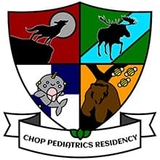
Residents are divided into four distinct CHOP "houses:" Walnut, Spruce, Pine, and Locust.
The houses function to support intra- and interclass camaraderie and fun competition for initiatives such as conference attendance and participation in various CHOP activities. From designing house crests to contesting the coveted "CHOP House Cup," the houses provide an outlet for creative and social energy, deepening the connections that make our residency program family so special.
A chief resident and associate program director are assigned to each house to serve as a point people and mentors. Additionally, the mentoring program faculty members are included in houses to foster another layer of connectedness and support.
Multicultural Physicians’ Alliance
The Multicultural Physicians’ Alliance (MPA) is composed of under-represented minority residents, fellows and attending physicians who are committed to creating a diverse workforce that affords the finest and most culturally effective care to the patients and families of The Children’s Hospital of Philadelphia. Through active participation in the recruitment process, we are dedicated to ensuring that the medical staff is reflective of the community it serves.
The MPA meets several times a year to organize activities for recruitment, to participate in community outreach, and to provide a supportive social network for its members. Through the support of Children’s Hospital of Philadelphia’s Pediatrics Residency Program and the Office of Diversity, Equity, and Inclusion, this unique organization has become an integral part of the CHOP community.
Providers of Pride
Providers of Pride (POP) is a physician-led network dedicated to identifying and addressing the needs of LGBTQ+ residents, fellows, and attending physicians at the Children’s Hospital of Philadelphia (CHOP). POP aims to promote an inclusive and equitable environment through education and advocacy surrounding LGBTQ+ health. Additionally, we are committed to cultivating cultural diversity by promoting the recruitment, retention, and representation of LGBTQ+ residents, fellows, and faculty, while fostering a sense of community amongst queer trainees and providers here at CHOP.
Resident Groups
NERD Squad
The NERD (New Epic Resident Development) Squad is composed of energetic and like-minded residents who have an interest in creating digital solutions to improve patient care and physician workflow.
The group brings together residents with wide-ranging skills and interests, along with informatics fellows and faculty members, to help foster resident-based initiatives. For example, in an effort to allow residents to focus on patient care and education, NERD Squad members have been responsible for many of the document templates and "Dot Phrases" used throughout the hospital that streamline the admission and discharge processes. Other projects include recurring "Epic Hackathon," informatics simulation sessions, and smartphone integration of the beeper system.
Residents can gain further exposure to the field of medical informatics through the Medical Informatics elective and the Advanced Skills in Medical Informatics curriculum. Interested residents are also encouraged to apply to the Clinical Informatics Fellowship at CHOP.
CHOP Parents
The residency program organizes CHOP Parents, a supportive group of residents, fellows, and attendings connected by the common experience of parenting while pursuing careers in academic pediatrics. The group is a resource to share advice and resources and to discuss the challenges and joys of seeking balance as a physician parent. The group also gathers for play dates throughout Philadelphia’s neighborhood playgrounds or stroller runs on the park trails.
Take Part!
Graduate Education Committee (GEC)
At CHOP, our Graduate Education Committee (GEC) serves to review the educational aspects of the various rotations experienced by our pediatric resident trainees.
The committee is comprised of faculty education liaisons from the various divisions in the Department of Pediatrics and the Department of Critical Care. The resident committee members are representative of their training year class (five to six per class) from the categorical pediatrics program, peds-neurology, peds-genetics and medicine-pediatrics training programs. Each of the division chiefs also sits on the committee.
Although specific rotations are reviewed at each meeting, the focus of the meeting concentrates on common themes, tested solutions and shared suggestions for improvement. The GEC also serves as Faculty Advisory Council, along with resident participation, as an annual review of the program.
Residency Leadership Council
The Residency Leadership Council (RLC) brings together residents, chief residents and program directors to review resident feedback and prioritize and implement improvements within the Residency Program. The RLC is designed to make the most of our collective capacity for innovation in an environment that promotes collegiality, collaboration and transparency.
The structure of the RLC involves regular meetings with program leadership, chief residents and RLC subcommittee representatives, as well as resident town hall forums. The resident forums are a venue for the RLC leadership to report program updates and to allow the residents to discuss any new issues or concerns. The RLC leadership meetings are designed to discuss and address issues raised by residents at the forums as well as issues brought up by chief residents and program directors.
RLC subcommittees
The RLC is comprised of six subcommittees: Advocacy, Anti-racism, Education, Nursing and APP Communications, QI and Operations, and Wellness. Below are some examples of work underway by these subcommittees.
- Anti-Racism: The Anti-Racism Committee (ARC) proudly has over 50 resident members committed to taking action to undo years of systemic oppression and better support our Black and Brown colleagues, patients, and community. With support of (and in close collaboration with) program leadership, we are divided up into several subcommittees to think hard about how to promote anti-racism in ourselves, our resident culture and clinical training, our workforce, the hospital system, and in the Philadelphia community.
- Education: The Education Committee is dedicated to improving the educational experience of residents at CHOP. We strive to enhance clinical education by providing resident feedback at the GEC (Graduate Education Committee) meetings. Each clinical experience/rotation has its own dedicated meeting which is attended by program leadership, rotation directors, and residents. It is a great way to get a peek behind the curtain at all of the hard work that goes into making each rotation as educational and meaningful as possible.
We also hope to facilitate knowledge sharing and educational resources amongst residents, which includes the handy-dandy residency survival guide (tips and tricks that include both practical and clinical knowledge for each rotation). Finally, we support residents in starting, joining, and implementing educational initiatives within our program or at the institutional level. We have some great projects in the works currently: a senioring curriculum, medical humanities curriculum, medical education for different learning styles, and more! - QI/Operations: The QI/Operations Committee works to solicit resident feedback and identify program areas of strength as well as targeted areas for improvement. We collaborate with other RLC committees and work closely with program leadership to implement and measure change. We host regular noon conferences (resident only!) to make sure we are capturing honest resident feedback.
This year, our team has some exciting projects in the works! We’re working with our friends on the Education Committee on evaluating and studying our new (amazing!) X+Y schedule; continuing to optimize continuity with our patients and families at our 3 clinic sites; leading discussions about quality improvement and systems-level change with our residency program MM&I (Morbidity, Mortality, and Improvement) conference series; and continuing our core mission of communicating resident feedback to program leadership. We’re excited for the year ahead!